Fitness is often treated as though it means only one thing: physique, athletic performance, or perhaps physical health in general.
I use the term more broadly than that.
Physical fitness matters. Physical exercise, nutrition, recovery, body composition, endurance, strength, mobility, and energy all matter. But human fitness is broader. It includes how well you think, how well you regulate your emotions, how openly and meaningfully you relate to others, how honestly you face reality, how effectively you make decisions, and how coherently you live.
That is why this is Integrated Fitness Coaching.
What "integrated" means
At the highest level, I think in terms of three aspects of a human life:
- body (your physical being): exercise, nutrition, sleep, recovery, health practices, and all the concrete actions that shape your physical condition
- intellect (your capacity to think): to understand, to reason, to judge, to learn, and to plan
- spirit (your emotional and experiential life): how you experience yourself and the world, your patterns of feeling and response, your capacity to act deliberately rather than impulsively, your emotional regulation, your relationship to yourself and to others, your groundedness, your resilience, your sense of life, and your capacity for joy, peace, courage, and steadiness
I do not use the phrase "mind, body, and spirit" because I regard the spirit as a secular aspect of the mind. The common phrase tends to imply that the mind means only the intellect, and I do not think that is right. The mind includes both thought and feeling. So for practical clarity, I prefer to distinguish body, intellect, and spirit.
While these three aspects are distinct, they are not separate.
They interact continuously, each influencing the others in ways that shape how you think, feel, act, and develop over time.
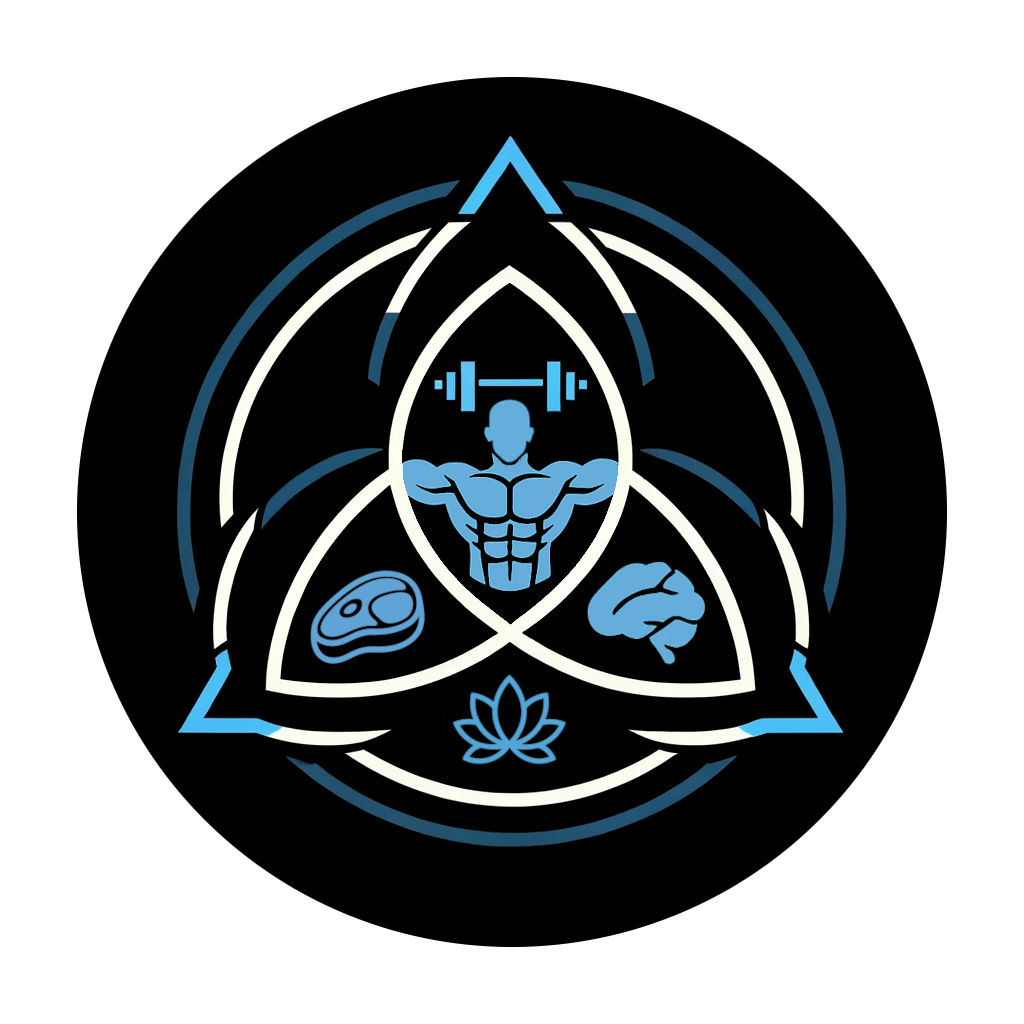
This is why the triquetra is the central symbol in the Integrated Fitness Coaching logo: It conveys the interdependence of body, intellect, and spirit.
Each loop retains its own identity, but none stands alone. The shape is not a stack, not a hierarchy, and not a collection of isolated compartments; it is an interwoven structure.
The body is not an afterthought to the life of the mind. The intellect is not a luxury to be pursued only after physical goals are satisfied. The spirit is not something mystical floating apart from the rest of your life.
Each is part of the same whole.
The triquetra expresses that visually: enduring distinctions held together in integration.
Why integration matters
Most approaches to self-improvement are fragmented, and this can be seen in patterns like the following:
- chasing physical results while neglecting stress, mindset, or emotional regulation
- trying to think one's way into better habits while ignoring sleep, food, and movement
- pursuing peace or mindfulness while neglecting the discipline and friction of physical training
- pursuing intellectual growth while living in a body that is tired, undernourished, dysregulated, or chronically neglected
- attempting to improve oneself in isolation while ignoring how relationships—family, friendships, romantic partnerships, and work—shape stress, decisions, and consistency
- struggling with recurring interpersonal conflict, avoidance, or miscommunication that creates ongoing friction and undermines progress in other areas of life
- pursuing personal growth while remaining embedded in relational patterns that reinforce the very behaviors one is trying to change
- relying on willpower and internal effort while underestimating how much one's relational environment either supports or undermines the ability to follow through
Progress may occur for a while. But over time, the neglected areas begin to undermine the very areas being emphasized.
This fragmentation becomes especially clear in familiar archetypes:
- the jock who is physically developed and disciplined, but unable to think critically about his training or his life, and often limited by emotional dysregulation that leads to inconsistency or self-sabotage
- the nerd who is intellectually capable, but physically underdeveloped, with a body that limits his energy, resilience, and even cognitive performance, and with interpersonal difficulties that prevent his abilities from fully translating into achievement
- the ascetic mystic who is focused on inner experience and emotional or spiritual development, but unwilling to engage in rigorous thinking or disciplined physical training, leaving contradictions unresolved and the body underdeveloped in ways that ultimately undermine emotional stability itself
In each case, the limitation is structural.
Neglect in one domain does not leave the others untouched. It feeds back and constrains them, including the one being emphasized.
That is why so many people find themselves stuck in loops like the following:
- knowing what to do, but not following through
- doing well for a while, then crashing
- making physical progress, but feeling psychologically worse
- feeling philosophically clear, but behaviorally inconsistent
- improving one part of life, while the rest becomes more difficult to manage
The answer is not to pursue all goals equally, all at once, with maximal intensity.
The answer is to understand the whole system and work in a way that respects how the pieces fit together.
Not everything has to be the starting point
An integrated approach does not mean every coaching relationship begins with all domains equally foregrounded.
People come in with different needs.
Some clients primarily want help with
- physical exercise
- nutrition
- body composition
- strength
- endurance
- energy
Others primarily want help with
- adherence
- emotional regulation
- interpersonal dynamics
- stress
- self-awareness
- consistency
- recovering from dysregulation
Others still are more focused on
- intellectual clarity
- values
- decision-making
- self-command
- building a life that feels coherent
Any of those can be a legitimate starting point.
Coaching engagements do not all begin in the same place; wherever we begin, I keep the whole person in view.
If someone comes to me wanting help with stress and emotional regulation, that is a valid first-class coaching focus. But I will still be thinking about sleep, nutrition, movement, environment, habits, and physical practices that support steadiness.
If someone comes to me wanting help with physique, performance, or physical health, that is also a valid first-class coaching focus. But I will still be thinking about mindset, emotional patterns, expectations, self-talk, and the broader structure of life that determines consistency.
What this approach is not
This approach is not:
- a fad diet
- bro science
- perpetual optimization for its own sake
- a rigid life system meant to dominate every hour of your day
- therapy by another name
- spiritual vagueness or mystical self-help language
- a physique-only coaching model with a little mindset sprinkled on top
It is also not a denial that different domains have different methods.
Physical exercise is not the same thing as meditation. Meditation is not the same thing as philosophical reasoning. Philosophical reasoning is not the same thing as meal planning.
Different domains require different tools.
Integration does not erase distinctions. It places them in their proper relationship.
Governing principles
Start with reality
The process has to begin with what is true:
- your actual goals
- your actual constraints
- your actual patterns
- your actual life
Not fantasy. Not performance. Not the person you wish you already were.
Use the highest-leverage interventions first
When something is not working, the answer is often not more complexity.
Usually the first question is: What are the most important variables here?
On the physical side, that might mean
- calorie balance
- adequate protein
- a practical and sustainable training structure
- sufficient recovery
- a better food environment
- regular movement
On the emotional and behavioral side, that might mean
- reducing friction
- regulating stress
- better routines
- more honest self-observation
- improving the quality of relationships
- changing the environment so better choices become easier
On the intellectual side, that might mean
- identifying contradictions
- clarifying values
- clarifying standards
- improving judgment
- thinking more explicitly about cause and effect
- learning to distinguish wishes from facts
Build sustainability, not theatrics
Short bursts of intensity can be useful. But intensity is not the same thing as effectiveness.
I am not interested in helping people white-knuckle their way through an unsustainable routine they will soon abandon.
I am interested in helping people build something they can actually live with:
- disciplined, but not brittle
- ambitious, but not self-destructive
- principled and therefore not detached from real life
Treat feedback honestly
Progress depends on reality contact.
That means looking clearly at
- what is working
- what is not
- where the friction really is
- what you are avoiding
- what you are rationalizing
- what needs to change
This is true whether the domain is body composition, emotional regulation, or the principles by which you are trying to live.
Aim for increasing competence
Coaching should not keep you dependent on a coach forever; instead it should make you more competent over time:
- understanding what you are doing
- understanding why it works
- becoming more capable of managing yourself well
- becoming more integrated over time
A successful outcome is not that you need me indefinitely.
It is that you become progressively more capable, more self-directed, and less dependent on external guidance. Ideally, you no longer need my services.
What coaching looks like in practice
In practice, integrated coaching often includes some combination of
- physical training programming and review
- nutrition strategy
- habit design
- recovery structure
- emotional regulation practices
- mindfulness support
- environment design
- values clarification
- decision-making support
- reflective or Socratic conversation around how you are living and what is getting in the way
Not every client needs all of that.
But any of it may become relevant, depending on the goal and the point of friction.
The common denominator is this:
Isolated successes are fine, but they matter only if they begin to accumulate into a stronger, clearer, more coherent human being.
This is also why coaching is not interchangeable with tools or information sources like "AI" or LLMs. The value is ongoing engagement: feedback, accountability, and judgment applied to the facts of your actual life—not just answers to prompts.
Who this is for
This approach tends to fit people who:
- want durable progress rather than dramatic swings
- are willing to be honest about reality
- want more than a generic diet or exercise template
- care about physical development without reducing life to physique
- want to become more self-directed, more capable, and more integrated
- are open to examining what they do, how they think, and how they live
The goal
Looking better, performing better, thinking better, and feeling better all matter. Treated in isolation, each can become too narrow.
The aim is to live better.
That requires working on the whole in a principled way.
Ready to go further?
Review the coaching options to compare support levels, pricing, and how the process begins. For practical questions about scope, communication, timelines, and who this is for, read the coaching FAQ.